In the fast-paced world of business, staying ahead of the curve is crucial for success. As technology continues to evolve, one groundbreaking innovation has taken center stage: Artificial Intelligence (AI). Businesses across the globe are embracing AI for business management, recognizing its potential to revolutionize operations and decision-making processes. In this article, we explore the significant role AI plays in business management, focusing on its applications, benefits, and the transformative impact it has on various sectors.
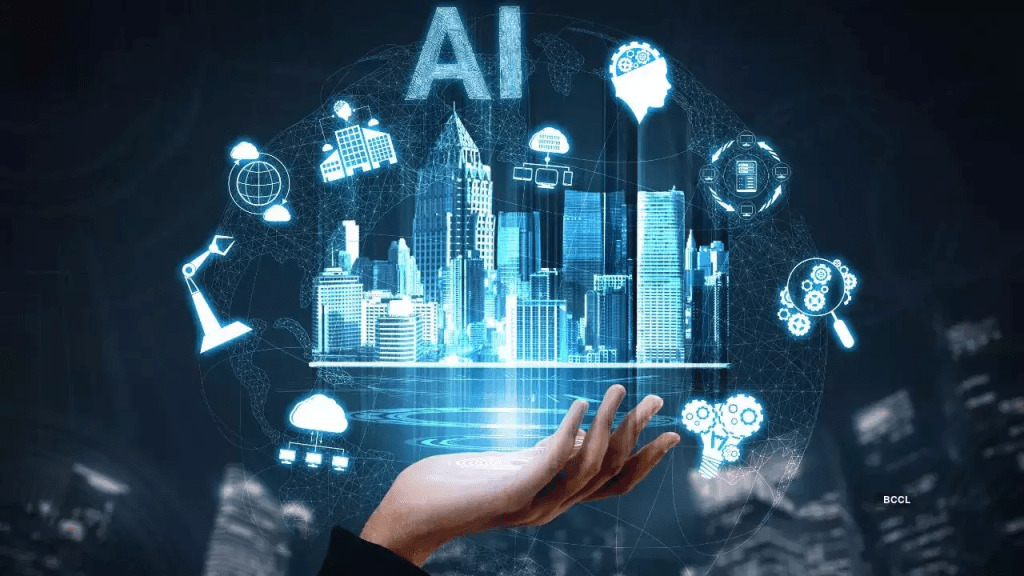
Understanding AI in Business Management
Defining AI for Business Management
AI in business management refers to the integration of artificial intelligence technologies into organizational processes to enhance efficiency, productivity, and decision-making. This involves the use of machine learning algorithms, natural language processing, and data analytics to automate tasks, gain insights, and make informed strategic decisions.
Applications of AI in Business Management
- Data Analysis and Insights:
AI empowers businesses to analyze vast amounts of data quickly and accurately. By leveraging machine learning algorithms, organizations can extract meaningful insights from complex datasets, enabling data-driven decision-making. - Predictive Analytics:
AI algorithms can predict future trends and outcomes based on historical data, assisting businesses in making proactive decisions. This capability is particularly valuable in supply chain management, financial forecasting, and risk assessment. - Automation of Routine Tasks:
Mundane and repetitive tasks can be automated through AI, freeing up valuable time for employees to focus on more strategic and creative aspects of their roles. This leads to increased efficiency and reduced operational costs. - Customer Relationship Management (CRM):
AI-powered CRM systems enhance customer interactions by providing personalized recommendations, predicting customer needs, and automating communication. This results in improved customer satisfaction and loyalty. - Human Resources Management:
AI facilitates more effective recruitment processes by analyzing resumes, conducting initial candidate screenings, and predicting employee performance. It also aids in employee engagement through personalized learning and development programs.
The Benefits of AI for Business Management
1. Enhanced Decision-Making
AI augments decision-making processes by providing real-time insights and predictive analytics. Business leaders can make informed decisions based on data-driven evidence, reducing the risk of human error and enhancing overall strategic planning.
2. Increased Efficiency
Automation of routine tasks and streamlined processes lead to increased operational efficiency. AI eliminates bottlenecks, reduces manual errors, and accelerates task completion, allowing organizations to achieve more with fewer resources.
3. Cost Savings
By automating repetitive tasks and optimizing resource allocation, AI contributes to significant cost savings. Organizations can reallocate budgetary resources more strategically and invest in areas that drive growth and innovation.
4. Improved Customer Experience
AI applications in customer service and CRM contribute to a personalized and seamless customer experience. From chatbots providing instant assistance to predictive analytics anticipating customer needs, AI enhances customer satisfaction and loyalty.
5. Competitive Advantage
Businesses that embrace AI for management gain a competitive edge in the market. The ability to adapt quickly, make data-driven decisions, and innovate processes positions organizations as leaders in their respective industries.
The Transformative Impact Across Sectors
1. Healthcare
In the healthcare sector, AI aids in diagnostics, treatment planning, and drug discovery. Machine learning algorithms analyze medical data to identify patterns, predict disease outcomes, and enhance patient care.
2. Finance
AI plays a crucial role in the finance industry, automating tasks like fraud detection, risk management, and algorithmic trading. This ensures financial institutions operate securely and efficiently.
3. Manufacturing
In manufacturing, AI optimizes production processes, predictive maintenance, and quality control. This results in increased productivity, reduced downtime, and improved product quality.
4. Retail
Retailers leverage AI for inventory management, demand forecasting, and personalized marketing. This enhances the customer shopping experience and helps businesses stay agile in a dynamic market.
Conclusion
As the business landscape evolves, the integration of AI in business management is no longer an option but a necessity for those seeking sustainable growth and success. The benefits of AI in decision-making, efficiency, cost savings, customer experience, and competitive advantage are evident across various sectors. Embracing AI is not just a technological upgrade; it’s a strategic imperative that positions organizations to thrive in the ever-changing business environment. The future of business management is undoubtedly intertwined with the transformative power of artificial intelligence.
 Archie Evans Tech